§ Prompt → Deployed Application

The investment thesis in concrete terms.

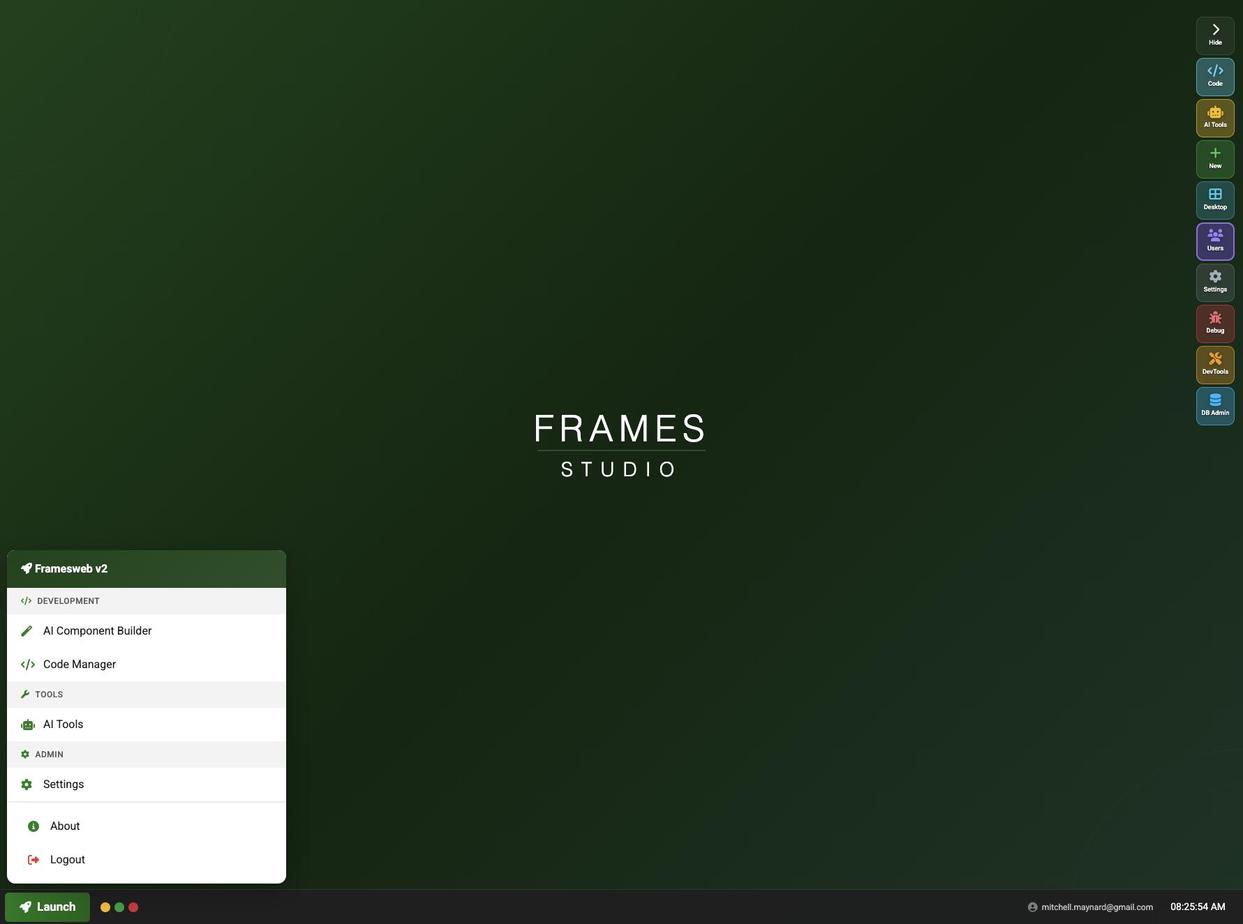
The full demonstration of the platform’s investment thesis: an AI agent receives a natural-language prompt, generates the records, runs tests against the records, promotes them to production, and the application is live. No build step. No pipeline. No deployment artifact. The page below explains why each stage is structurally impossible to do reliably on a traditional toolchain.

Build and Deploy Frames in Minutes 8 min · Mitch Maynard · Hosted on Loom

An eight-minute walkthrough: signing up, creating a frame from a template, generating component code (HTML/JS/CSS plus Python), and deploying to production — no Git, no CI/CD, no build pipeline. For a narrated live walkthrough with Q&A, partners can request one on the Connect page.

Hands-on access

See it running. Live.

Skip the video. The development environment is open to qualified partners and reviewers.

Request Access

What you just watched, stage by stage.

Six stages. Each stage explains what is happening — and why this is structurally impossible to do reliably on a traditional toolchain.

Stage 01

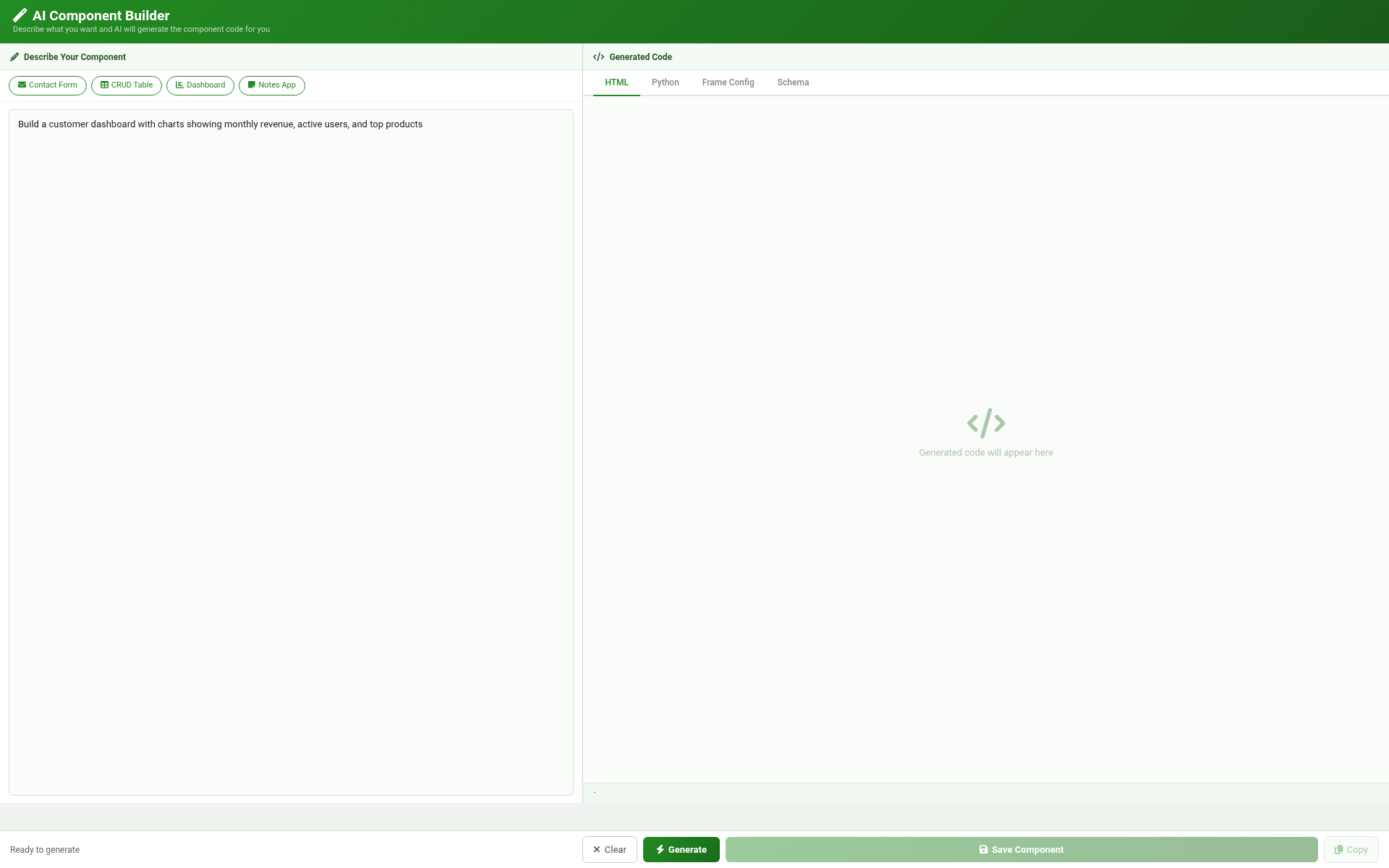
Natural-language prompt → three records.

What happens

A natural-language description of the desired application is submitted to the AI Component Builder. The platform parses it into the three artifacts every component requires: a frame configuration, a front-end record, and a back-end record.

Why it’s structurally hard elsewhere

On a traditional stack, this stage produces text in a chat window. The text has to be manually copied into files, files saved to a repo, repo committed, branch pushed. Every step is an opportunity for the agent to drift out of sync with the project’s state.

Stage 02

AI emits HTML/CSS/JS, Python, and JSON config.

What happens

The AI emits three records: HTML/CSS/JavaScript for the front-end, Python for the back-end, and a JSON frame_config record describing window dimensions, persistence rules, and access policies. Vanilla web standards. No transpilation. No bundler in the loop.

Why it’s structurally hard elsewhere

Frameworks add transpilation steps that the agent must be aware of. JSX is not JavaScript. TypeScript is not JavaScript. Tailwind is not CSS. Each abstraction is a place where what the agent wrote is not what runs.

Stage 03

Records saved to dev_db.

What happens

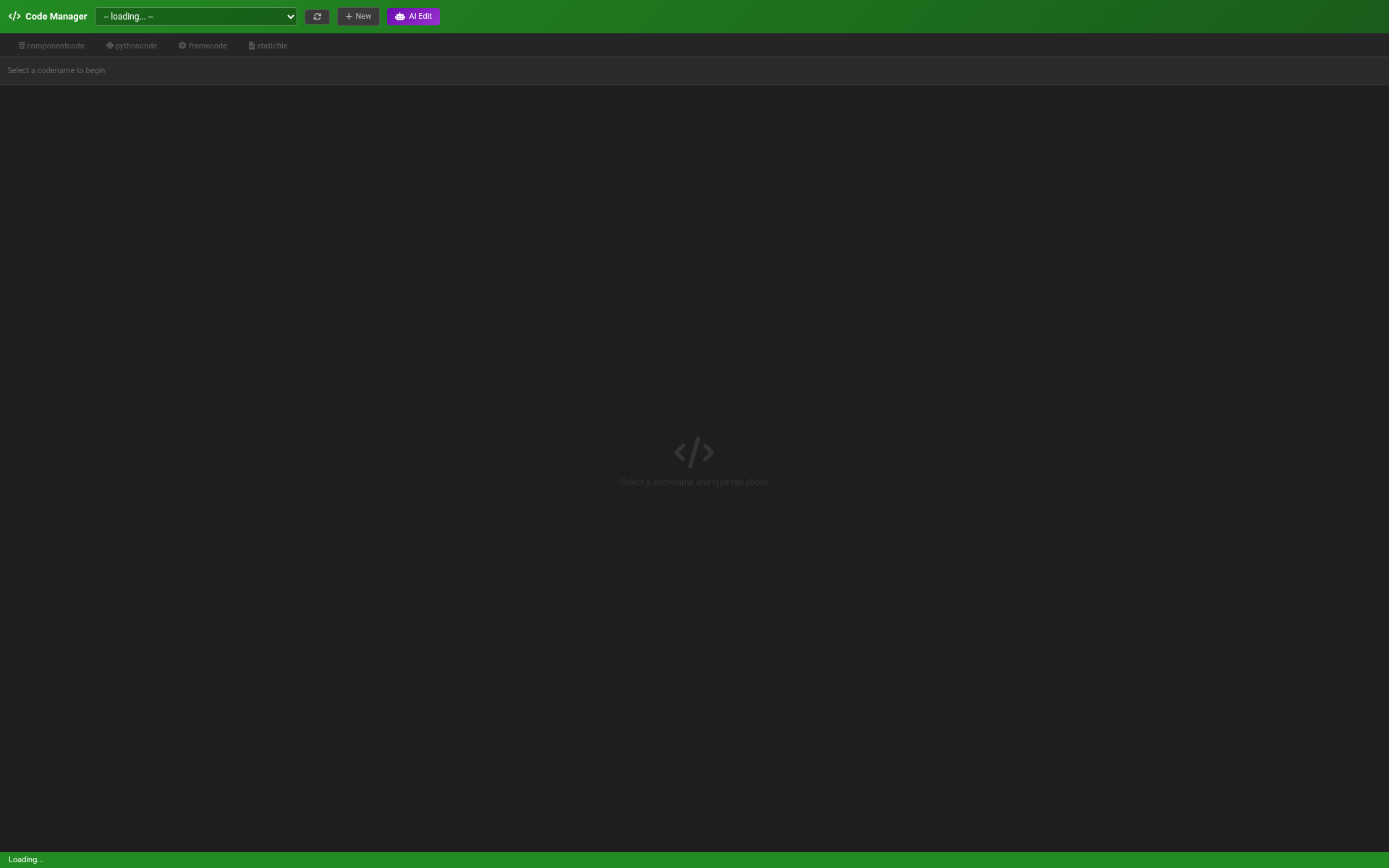
The records are inserted into the development database with a version number, a timestamp, and a commit message. This single transaction is the entire ‘commit’ operation — there is no working copy to stage, no diff to resolve, no merge to perform.

Why it’s structurally hard elsewhere

Git workflows assume a distributed file system. Distributed systems require reconciliation logic — branches, merges, rebases, conflict resolution. None of these are reliable for an autonomous agent. They are the leading source of failure when agents are turned loose on real codebases.

Stage 04

Tests run against the records.

What happens

Automated test cases are executed by the same hydration runtime that serves users. The agent observes the test results as rows in a results table. Failures trigger a rewrite of the offending record; passes mark the build as promotable.

Why it’s structurally hard elsewhere

On a traditional stack, the agent must coordinate between a CI/CD provider’s API, a test runner’s output format, a containerized environment, and a status check on a pull request. Each interface has its own auth, its own retry semantics, and its own failure modes.

Stage 05

One SQL statement promotes the build.

What happens

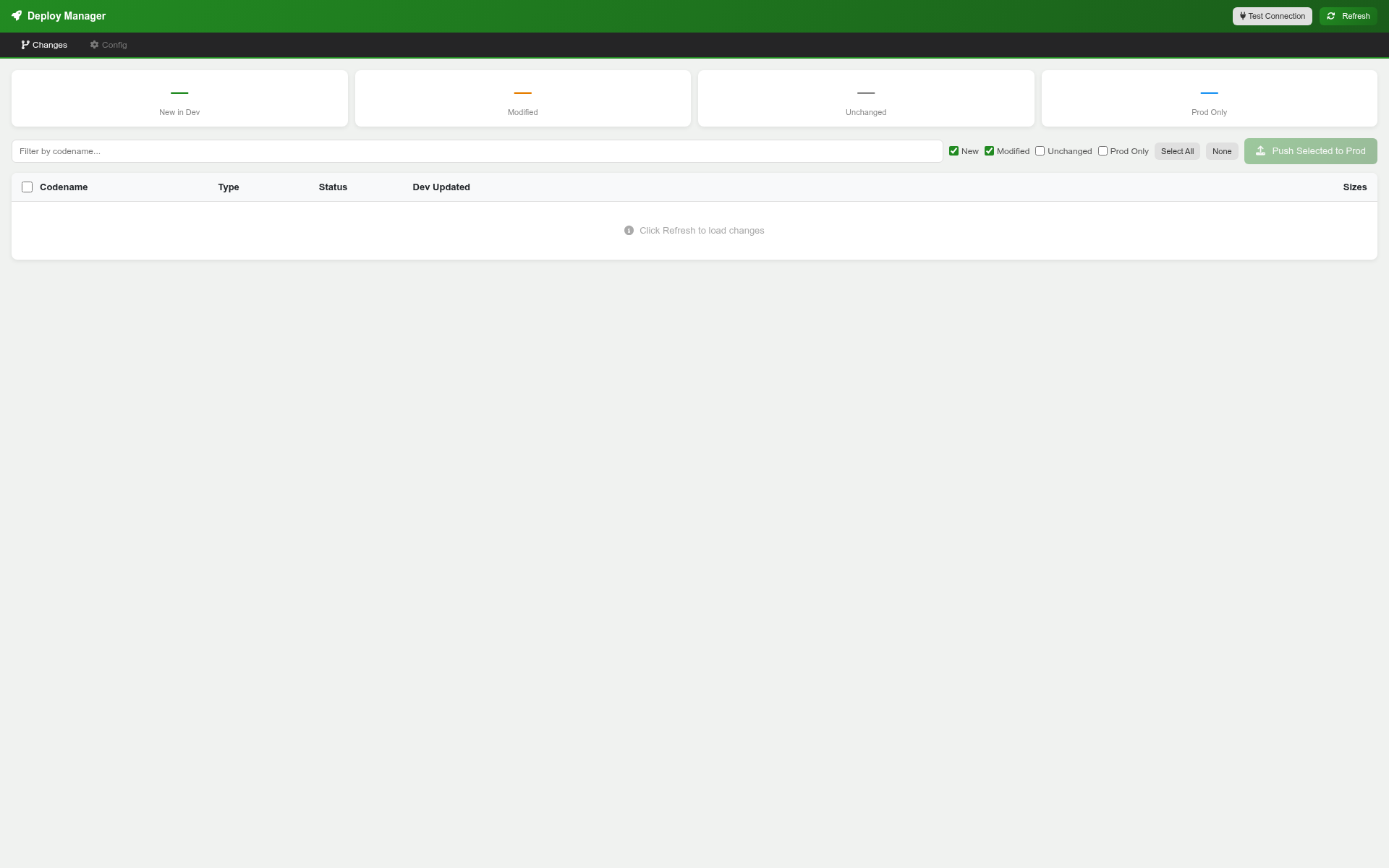
Records that passed are copied from the development database to the production database in a single transaction. There is no build step, no artifact, no upload, no pipeline run. The application becomes live the moment the transaction commits.

Why it’s structurally hard elsewhere

Production deployments on a traditional stack involve at minimum: building an artifact, uploading it, swapping a load balancer pointer, and waiting for warm-up. The cost of a bad deploy is non-trivial. An agent doing this autonomously is one timeout away from a half-deployed system. Here it is one statement away from atomic success or atomic rollback.

Stage 06

The application is live.

What happens

The next user request hits the production runtime, hydrates the new records, and the new application is what the user sees. There is no cache to invalidate, no CDN to purge, no DNS propagation, no warm-up window.

Why it’s structurally hard elsewhere

Every traditional stack has a gap between ‘deploy completed’ and ‘users actually see the new version.’ That gap is where most deployment-related incidents originate. In a database-driven runtime, the gap is the duration of a SQL commit.

“The entire investment thesis, demonstrated in concrete terms.”

Every other developer environment on the market was designed for humans and is being retrofitted for AI. This one was designed in a way that happens to work as well for an agent as it does for a person. The demo is the existence proof.